Sacred Activism: Engaging Communities of Faith in Environmental Advocacy


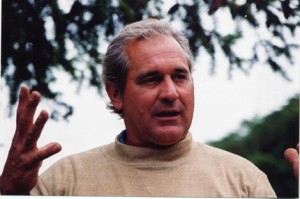
The National Bioneers Conference brings together exciting and cutting-edge innovators tackling the world’s most challenging social, cultural and environmental issues. In our new series, we bring together two thought-leaders and BioCon 2013 presenters to share their deep wisdom in an intimate, in-depth conversation between peers. In our first conversation between Sufi mystic Llewellyn Vaughan-Lee and theologian Matthew Fox, the faith leaders discuss sacred ecology, unity consciousness, spiritual narcissism and bringing reverence for the earth into today’s ecological debate.

Matthew: Today [Bioneers has asked] us to talk about ecology and spirituality. Who can deny that it doesn't matter what your particular tradition is, or if you're an atheist, if your backyard is burning up and you can't plant food anymore, and the waters are rising? We're all in trouble. And it can finally bring religions together and get over their narcissism. 

Llewellyn: I hope so. Mysticism, as you know, has always held this common thread underneath religion- the union of inner experience. Part of the reason I wrote this book, Spiritual Ecology, was to try to bring that into the ecological debate because I felt that, although it was present, it wasn't voiced enough.

Matthew: Absolutely. That's what I've been trying to do with the archetype of the cosmic Christ- to awaken at least Christians that crucifixion is not something that happened 2,000 years ago, it's happening with the killing of the rainforests and the whales and the polar bears and everything else today.

Llewellyn: It's happening to the earth.

Matthew: To me, that not only can energize spiritual warriors to get work done today, but it also can reinvent our faith traditions themselves, which I think fall into narcissism as distinct from mysticism.

Llewellyn: I have a concern that somehow people who have a spiritual awakening or awareness are somehow too focused on their own individual inner spiritual journey, and to me this is a travesty of real spiritual awakening or spiritual awareness, which has to do with the whole, and this whole includes the earth.

Matthew: I couldn't agree more. If you're breakthrough does not lead to transpersonal service, to compassion, to justice, including ecojustice, then I doubt its authenticity. And Jesus said it very simply, that by their fruits you'll know them. And we can be so taken by our spiritual experiences that we don't realize this about energizing you to serve.

Llewellyn: In Sufism they actually say after the station of oneness comes the state of servant hood, that one is then in service. Sufis are known as servants.

Matthew: Or as someone else put it, after ecstasy comes the laundry.

Llewellyn: Somehow we have become so focused on our own human journey that we've forgotten that this human journey is part of the earth's journey. There used to be, I'm sure you're aware of this, a deeper understanding that our soul is part of the world's soul, the anima mundi, and we've lost that connection. We've lost that understanding that our spiritual light is part of the light of the world. And we have to regain that.

Matthew: Right. And how the earth story itself is part of the cosmic story.

Llewellyn: It's all one. It's all one living, breathing, inter-related, interdependent spiritual organism as much as a physical organism, and I think we have, for some extraordinary reason, forgotten that.

Matthew: I think there are a lot of reasons, and one of them is the anthropocentrism and the narcissism of the modern consciousness. But I also think part of it too is the beating up of matter over the centuries by theologically influential thinkers. That kind of separation, that kind of dualism is so destructive because then you think the body is secondary, and then Mother Earth is secondary, and everything else. To put things in context, we wouldn't have our imaginations and our breath and our food and our existence without matter. Matter is not an obstacle to spirit.

Llewellyn: I think the early rejection of all of the earth-based spirituality by the Christian church has left a very sad vacuum that we're now, in a way, seeing the result of.

Matthew: Paying the price for. And I think it goes back, actually, to the 4th century. If you're going to run an empire- as the church more or less inherited the empire in the 4th century, it behooves you to split matter from spirit, and also to talk about original sin, and get people confused about their own inner nobility and empowerment, and divinity, really. I think that it has served political interests and cultural power trips to split people that way.

Llewellyn: Well, the male domination of nature kind of took the high ground, and now we have to, in a very few years, try to redress this balance and reclaim the sacred nature of creation. And what is central to me is to try to bring that into the ecological debate because I don't see how we can address this physical devastation of creation, this ecocide, unless we look at its spiritual roots and reconnect ourselves to the sacred nature that is the world around us.

Matthew: And within us. And that's what makes deep ecology different from ecology.

Llewellyn: Right. My teaching is to say mystics teach simple things, but those simple things change people's worlds. And how can we re-energize that mystical perspective so we can bring it into this global arena that is calling out to us? I mean, the earth is calling. That's why I called this book Spiritual Ecology: The Cry of the Earth because the earth is crying, the soul of the earth is crying. We need to respond from our own soul as well as with our hands.

Matthew: And, of course, Einstein said it's from intuition and feeling that we get values, not from the intellect. He says the intellect gives us methods; it does not give us values. And I think when you look back at it, this is how various traditions of monastic learning also included the heart in some way or other.

Llewellyn: When you say including the heart, I would suggest something even more radical. How can we bring our love for the earth into the center of this concern with the well-being of the earth? In fact, Thich Nhat Hanh recently said real change will only happen when we fall in love with our planet.

As a mystic, I believe in the primacy of love, and we have this love for the earth. It is so generous. It has given us life. It has given us breath. It has given us water. And we have treated it so badly in response. I feel that this mystical center of divine love is really the power behind the planet, because it is really what gives life to us all. I mean, it's a really radical thought to bring that essential quality into the ecological debate.

And although we have this physical responsibility, how can we bring this love that belongs also to our sense of the sacred? How can we learn once again to live in love with the earth in the way we live, in our daily activities so that everything becomes imbued with this sense of the sacred?

One can educate the mind, but also we somehow have been stripped of the power of love, which is, as a mystic, the greatest power in creation.

Matthew: In our traditions, certainly the Jewish tradition but also the Aquinas, it is said too that the mind resides in the heart. We don't have to, how should I say, pit one against the other. That real heart knowledge- when you're really in love with something, you want to learn more about it.

Llewellyn: Also the heart and the mind in the heart see the oneness in things. Sufis say when the eye of the heart is open—the Sufis talk about the eye of the heart—then in each atom there are a million secrets. And we see the unity in life, in everything that we are part of. We need to reclaim that unity, that oneness, because life is dying and it's dying because we split spirit and matter, we separated ourselves from creation. The analytic mind tries to split everything up into smaller and smaller pieces. We need to return to this oneness, this awareness of the interdependence of all of life, this web of life, which our ancestors knew and revered so deeply.

Somehow we have lost connection with this spiritual dimension of creation, and to me that is the root of our present ecological imbalance because we don't respect or revere creation as our ancestors and indigenous peoples have always done.

And somehow, as you say, the mystics have held this thread in the West, but a thread is no longer enough. It needs to be a revolution, a revolution of the heart, a revolution of consciousness that sees the oneness that is within and all around us. I suppose the challenge is, how do we give this back to humanity, this forgotten treasure, this secret, this deep awareness of the real nature of creation, that it is not dead matter?

I always say the world is not a problem to be solved, it's a living being to be related to, and it is calling to us. It needs our attention, not just of our minds, but also of our hearts. It is our own awakened consciousness that can heal the earth.

Matthew: Another dimension, I think, including when it comes to the love, is grief. We don't deal well with grief in our culture, and that's one reason I think anger gets battered all over the walls. We don't deal with anger in a constructive way very often.

I do a lot of grief ceremonies- we need practices and rituals. When grief builds up, when you can't deal with grief, not only does anger build up, but also that joy, that love gets clouded over, and people feel disempowered then. So I think grief work is a part.

What can I say? Who cannot be grieving today about what's happening to the earth? You'd have to be extremely busy covering up your grief and putting a lot of energy there.

Llewellyn: But I think we do. We're a culture of mass distractions. We try to avoid at all costs seeing the real fruits of our actions.

You talk about practices; I would say the most important practice is to listen. Thich Nhat Hanh said to heal the earth, he says to listen to its cry because the earth is crying, but we don't know how to listen. We've forgotten this feminine wisdom of deep listening. If there is deep ecology, there is deep listening. We have to relearn this feminine wisdom of listening to the earth. It is so old, it is so wise, it has been through many crises before, and we need to cooperate.

In fact, Thomas Berry says we are only talking to ourselves; we are not talking to the rivers; we are not listening to the winds and stars; we have broken the great conversation. By breaking that conversation we have shattered the universe. And we have to learn again how to listen to the earth, and how to open that ear of the heart. We have been told this great lie that we are separate from the earth, that it is something out there. It is not out there, we are part of the earth. We are made of stardust.

We need to feel the grief within our own self for the earth and learn to listen to the earth, learn to hear it, learn to re-attune ourselves, just like the shamans did of old, just like the wise people who listened to the wind, who listened to the rivers, who felt the heartbeat of creation. And it might not sound very practical but it has a deep, deep wisdom within it, and I think we need all the help we can get at the moment.

Matthew: Absolutely. And that's where the world's spiritual traditions, if they get out of their anthropocentric, reptilian brain dimension of wanting to conquer each other and be number one or something gets shaken down, and as you say, bring this feminine dimension back, the receptivity and contemplation and silence.

Llewellyn: And not to rush for a quick fix, because I don't think we can quickly fix this environmental crisis. It has been building up for centuries.

Matthew: I do think that the patriarchal mindset feeds the reptilian brain excessively, whereas, I think the real way to treat the reptilian brain is to learn to meditate and be still, because reptiles like to lie low and in the sun… We have to make room for that mammal brain, which is half as old as the reptilian brain in us, which is the brain of compassion and the brain of kinship and family, and also of getting along with the rest of nature.

Llewellyn: This is what Oren Lyons said, when he spoke about our original instructions in the Native American tradition. He said one of the original instructions is we have to get along together. And it's very simple, but once you realize we are one living community and we can only survive as one living community, it's very fundamental. It's not sophisticated, but we seem to have forgotten it, that we are part of this living, interdependent, interwoven organism that is all around us and that we are part of.

I think we have a duty, any of us who have an awareness of this, to bring this into the forefront, to claim it; not to allow this dark side of our civilization to devour all the light. That's why when you spoke about religious narcissism, and I spoke about my concern that spiritually awakened people are just using their own light for their own inner spiritual journey or their own image of spiritual progress, we have to make a relationship between our light and the world which is hungry for this light. And there used to be always this relationship between the light of the individual soul and the light of the world's soul, and somehow we need to reconnect with this earth on a very deep, foundational, spiritual basis. We are part of one spiritual journey, one life journey, one evolution, and our soul and the soul of the world are not separate, and we have to reclaim this connection.

And somehow, as you say, human spirituality and religion became narcissistic, and that was never the intention because Christ's love was for the world; the Buddhist's peace was for the world. The message is always for the whole.

Matthew: I think today a lot of young people are being caught up in the vocation of, as you say, re-sacralizing the earth, but doing it through everything from the way we eat and farm to the way we do business and politics.

Llewellyn: It's the attitude that we bring to it. It's always the attitude. If we come in the deepest sense, with an attitude of prayer or even just respect and reverence for each other, for the earth, for what is around us, then the healing can begin, and the forces of darkness will recede. But we will wait and see.

It's been a pleasure talking to you.

Matthew: It's been fun. Thank you.

To hear Llewellyn Vaughan-Lee speak in person at Bioneers, click here

To hear Matthew Fox speak in person at Bioneers, click here
From the Culture of Soil to Cultured Foods

Bioneers presents an ecological-farm tour and fermented foods workshop with master nature farmer and Chez Panisse supplier Bob Cannard, and fermented foods revivalist and author Sandor Katz.

Bob

“The man who first taught me how to make sauerkraut is a leader of this underground, and possibly the most famous fermento in America. Sandor Katz is the Johnny Appleseed of fermentation… Since falling under the spell of Katz’s fermentation evangelism, I have launched big crocks of sauerkraut and kimchee; mason jars of pickled cucumbers, carrots, beets, cauliflower, onions and peppers; jelly jars of yogurt and kefir; and 5-gallon carboys of beer and mead. I am regularly reminded that all are alive.”                  –Michael Pollan

Beneficial microorganisms are a keystone element in soil fertility and human health. A mere tablespoon of thriving soil has about 50 billion microorganisms. A healthy human gut has approximately 100 trillion microorganisms that are essential to life. These microorganisms are life-supporting allies that provide multiple important functions that make nutrients more bioavailable, promote health and build immunity against disease. We are only now beginning to recognize the need to maintain healthy levels of microorganisms with better farming techniques and by eating more fermented foods.

On Monday, October 21 join Bioneers on a private farm tour with Green String Farm owner Bob Cannard, who will share his unique eco-farming practices that create deep fertility in the land, and intense vitality and flavor in the food he grows. In the afternoon Sandor Katz will teach a hands-on workshop on how to make powerfully healthy foods in your own kitchen, while discussing the wonderful, diverse, global culinary traditions and health benefits of fermented foods.

“Fermentation makes foods more nutritious, as well as delicious. Microscopic organisms, our ancestors and allies, transform food and extend its usefulness. Hundreds of medical and scientific studies confirm what folklore has always known- fermented foods help people stay healthy,” explains Katz.

Join Us for a day of farming and fermentation
Where: Green String Farm, Petaluma, CA
When: Monday October 21 from 10 AM- 4:30 PM
Cost: $175 (Includes lunch and bus transportation from Embassy Suites, San Rafael)
Register here

About our teachers

bob2

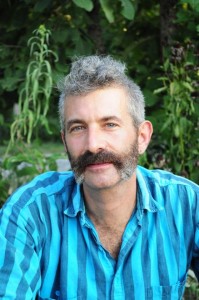
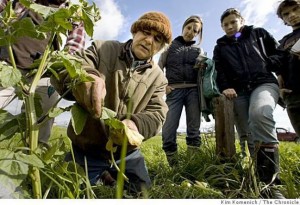
Bob Cannard has been farming sustainably for 30 years, and is well-known for providing produce to Alice Waters' Chez Panisse restaurant in Berkeley. In 2003, he co-founded Green String Farm, 140-acre (60 acres in cultivation) eco-farm in Petaluma that focuses on working with, rather than against, natural processes to grow a diversity of fruits and vegetables with practices that exceed organic standards, while also training new farmers.

Sandor Katz is a food activist, fermentation specialist and author of the book Wild Fermentation, widely considered the bible for DIY foodies.

An Indigenous Perspective on Energy Development: Q & A with Darcie Houck


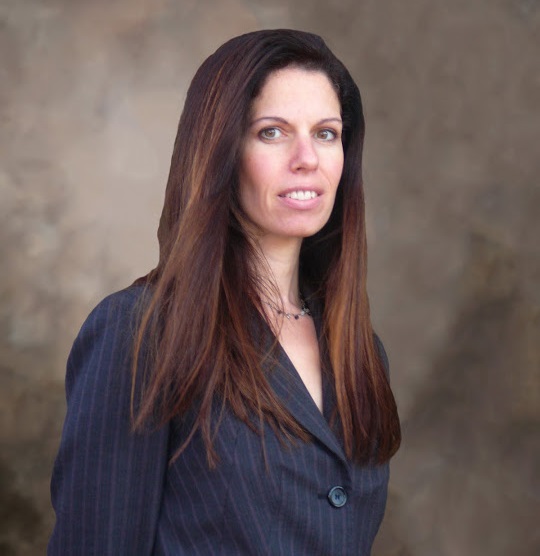
Darcie Houck is a descendent of Mohawk and Ottawa native tribes and an attorney specializing in environment, water resources, energy development and Native American land use. She previously served as staff council at the California Energy Commission, and has taught law at several universities, including UC Davis and San Francisco State.

Bioneers: Where are you from and how did you come to do the work you are doing?

Darcie: I’m from upstate New York, and am Ottawa and Mohawk on my mother’s side. I was very close to my Mohawk/Ottawa grandpa. He used to take me back to the reservation when I was a child, and told me that I needed to be a lawyer when I grew up to defend Native rights (chuckles). It always stayed with me. And that’s what I did. I was originally a political science major, until I wrote a paper on tribal government. I got a horrible grade and when I asked the professor why, he said, “Because tribal governments are not real governments.”  That moment changed my life. I went to the counseling center and was directed to the Native American studies program. I switched majors and ended up with an amazing education I wouldn’t have gotten if that incident hadn’t happened.

Bioneers: What kind of law do you practice?

Darcie: During the energy crisis, I was hired by the California Energy Commission because of my background with Native American law. They were dealing with potential projects on Indian land that they had never dealt with before. I learned a lot about energy law and environmental law. Then I went into practice with the largest private law firm in the US that focuses exclusively on Native American issues. We practice in everything from general counsel to internet gaming issues, cultural resource protection and water law.

My focus is environment, water and energy.  My passion is cultural resource protection, and unfortunately, because of the nature of the business, that work is typically pro bono.

Bioneers: What are the biggest issues you face in cultural resource protection cases?

Darcie: The cultural resource issues that deal with Traditional Ecological Knowledge (TEK) of Indigenous peoples are particularly critical because of what’s happening with climate change, and because many state and federal government decisions-makers base their decisions on western science. However, there has been some realization by these entities that TEK and all of the practices that Indigenous peoples have had forever are really what is going to create truly sustainable development. It’s a slow process. People are starting to listen.

Bioneers: Are your tribal clients resisting energy development or embracing it?

Darcie: Both, and there’s a lot of work trying to combine the two. That wasn’t the case 10-20 years ago. Tribes are really dedicated to improving their economies and looking at their natural resources as one option for development. Tribes want to develop these resources responsibly. You can be a traditionalist, want to have a sustainable way of living that respects and honors Mother Earth and nature, while utilizing modern tools in doing so.

Bioneers: Many environmental laws promise meaningful consultation with tribes for energy development; what is your take on the effectiveness of these consultations?

Darcie: I just sat on a panel at a tribal-sponsored conference in California with a representative from the Governor’s office who was unaware of any law that protected tribal cultural resources. Several laws already exist to protect cultural and historic resources. If decision-makers do not comprehend the importance of the resources that need protection, these resources will not be a priority. So these laws need to be interpreted and implemented in a meaningful way by those with the power to do so. Until this happens tribes will be fighting an uphill battle in the protection of these critical resources.

Also, tribes are often brought in at the tail end of the process. If tribes were brought in at the very beginning of the planning stage, and fully included as meaningful participants, we could probably avoid many of the problems we see with the development of some of the solar projects.

Bioneers: Like down in the Blythe, CA area where there’s a proposal to laser level a huge, magnificent portion of the Mojave for solar? The tribes are screaming, ‘hey wait, that’s a huge culturally significant, sacred area. You can’t do that.’

Darcie: And my perspective is that there’s a cultural disconnect that is so typically European. Throughout history, Europeans have come here and assessed the landscape as unutilized. They then decide to build this and destroy that in the name of progress. It’s the same with the desert- they see it as land that nobody is ‘using’ but in fact, it’s one of the few places left that has an intact ecosystem that is so beautiful and amazing.

There are other places to put solar that would be much more effective like rooftops, parking lots and other places that are already developed. We all hear talk about sustainable development and in-fill projects, but major projects still seem to lean toward green fields for large scale development.

Bioneers: What are some of the misperceptions about tribes and development?

Darcie: The same gentleman from the Governor’s office commented that, “We only hear from tribes that want to develop projects.” It seemed that he was insinuating that tribes only wanted to develop things, not save or protect them.  Just because a tribe has a resource that can be developed to the benefit of the tribe for economic or welfare purposes, does not mean that the same tribe is not concerned about protection of traditional cultural resources. The fact is that state governments don’t hear from many tribes because they often do not include them in the process until its too late.

Bioneers: What are some of the other challenges for tribes, whether it be supporting or opposing development?

Darcie: Oh, there are so many. You have this inherent contradiction where, despite public perception, it can be much more difficult for tribes to develop within their tribal lands than it is for off-reservation private entities to. And for those private entities, protecting cultural resources is often simply an afterthought.

Also as more and more issues face society at large with climate change, society as a whole will have to develop response strategies. In many cases it’s the global Indigenous communities that are facing the most severe impacts in very defined, limited land bases- impacts that they had no hand in the creation of, and often opposed or tried to prevent. These conditions will persist, and likely get worse.  We have to find a way to make sure that Indigenous voices are heard. Those who are facing the worst impacts should have an equal or even greater voice in what decisions are made, and we are not seeing that right now.

Bioneers: How do you make these Western laws mesh with the Indigenous thinking?

Darcie: That is so critical. These laws are made and developed by people who don’t have the same worldview.  The ‘dominant society’ priority is how to use a resource. The end goal is to use it, not preserve it. It’s so counterintuitive to the worldview of Indigenous communities.

Bioneers: Why should a wider audience listen?

Darcie: We, as a society, are in a disaster management stage, and the wisest people are the ones being overlooked because of people’s stereotypes of what a leader is supposed to look or sound like. How mainstream society has educated their children as to who is in charge and who is not- without a shift in that mentality, I don’t know what happens.  But I do think that with projects like Bioneers and other individuals I’ve met in this work, it gives me hope that there will be a shift before it’s too late.

Darcie Houck will be joining Bioneers for the first time as part of the Indigenous Forum.  She will be co-hosting a panel called From Conflict to Collaboration in Indigenous Territories: Tribal Strategies for Resistance and Restoration. Along with panelists Jihan Gearon (Dine/ African American), Tony Skrelunas (Dine) and Octaviana Trujillo (Pascua Yaqui), she will share realities, challenges and contradictions of indigenous resistance and restoration movements, as well as potential ways forward for indigenous peoples whose lands are presently the focus of economic interest.

Agriculture and Climate Change: An Interview with Darren Doherty

thumbnail

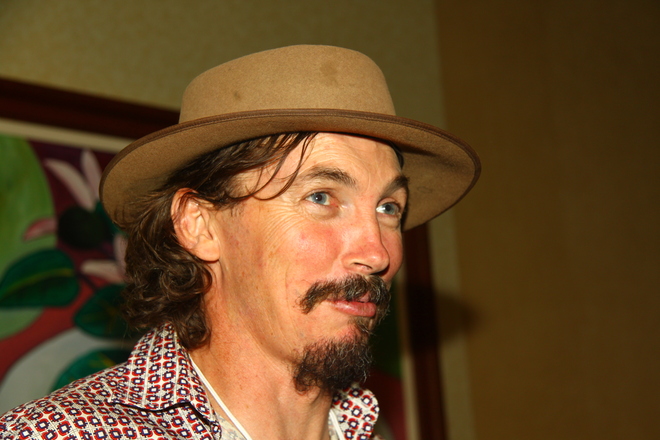
Darren Doherty has developed a set of ecological agricultural practices for large-scale farming that he calls Regrarianism, based on the work of master agrarians like Rudolf Steiner, Joel Salatin, Elaine Ingham and others. Regrarianism integrates Permaculture, Keyline design, Holistic management and carbon farming to transform farms from their current atrophic condition into regenerative systems that provide ecological profit as well as economic benefit.   

Bioneers: What are the basic principles of Regrarianism?

Darren: Some of the key principles are to produce stable environments with sound watersheds; increase wildlife species and stability of populations; improve water, soil and vegetation resources of cities, industry and agriculture; prevent waste of financial, human and natural resources; utilize Permaculture design principles; and develop viable decentralized energy production systems.

Bioneers: How does Regraranism help farmers mitigate and adapt to climate change?

Darren: One of the things we look at, which might seem like an unusual climate change strategy, is reducing debt, which in an agricultural environment is really crippling because it disempowers farmers from making the land stewardship decisions they would normally make. We try to get the debt out of the way by getting some higher margin activities in the stream of an enterprise so we can start to self-fund the more regenerative practices.

Bioneers: What’s the most important agricultural climate change practice?

Darren: We can start to build more soil carbon into the equation because that's one of the great buffers against climate change. Not only does it download atmospheric carbon out of the process, but it also creates a resiliency against the biggest problem in a lot of zones where there has been reliable rainfall in the past and now rainfall is unreliable.

Bioneers: How does carbon farming work?

Darren: There's an amount of carbon right above any landscape that can be utilized, primarily in the form of carbon dioxide and other carbon compounds that soil organisms, plants and others use as nutrients.

We're looking to create systems that hold more of that carbon in the organisms and the residues of those organisms for the longest possible times, and then take advantage of the benefits that the diversity and the residues provide. Whether that's residues in the form of humus, which is a very stable carbon-compound, or whether it's residues in terms of a leaf litter that's on the soil surface, which reduces evaporation.

We're trying to increase the retention time of carbon in its solid form in landscapes for as long as possible as opposed to allowing it to become gaseous, that's when it becomes quite dangerous to us all. That is what carbon farming is all about.

Bioneers: What's the relationship between carbon and water?

Darren: Every unit of soil carbon holds about eight units of water. Any farmer knows that as their carbon levels grow in their soil, so does the water holding capacity of that soil, and that also happens to increase the nutrient exchange capacity of that soil as well.

Bioneers: Can enough carbon be sequestered in soil to significantly mitigate climate change?

Darren: The only place in the world where there's more carbon than in the soil is in the ocean and in the sedimentary rocks. ­ We try to build in our system multiple elements with trees, ground cover, canopies of grasses or other plants, that keep carbon in its place for as long as possible, and therefore also hold water in place. ­

Bioneers: What’s the best way to keep carbon in place for as long as possible?

Darren: You have to understand the different kinds of carbon and the states of carbon soils. Let's look at compost, for example. Depending on the state of compost and how it's made, it's largely made up of what are called short-chain carbon molecules. So mulch, compost, leaf litter, cover crops, all of these things aren't processing carbon into its long-chain form. It's quite unstable, so as a result a lot of that carbon ends up being put back into the atmosphere.

Compost and cover crops certainly have a conditioning effect on the soil, but a lot of that carbon is being cycled within the top six inches of the soil, which is the highly aerobic zone of the soil, so carbon therefore is in a greater stage of flux.

Bioneers: Are you saying compost and cover crops are not effective ways to sequester carbon?

Darren: You might increase your net soil carbon quite heavily in the first few years by the application of compost, and all of the aforementioned methods, but will that last over the longer term? The answer is quite clearly no. Great techniques, great to do, but what we need more of is long-chain carbon. It's largely delivered in the form of polysaccharide exudate or nutrients released from plant root systems, particularly grasses.

Where we want the carbon and where farmers can look to increasing their carbon levels overall is in the depth of soil. You can have 10% carbon in the top six inches and 2% in the next 10 inches, and 1½% in the next 10 inches. That's not going to sustain agriculture over the long term, and the top 6 inches is not where carbon is going to be kept and stored and sequestered. It's pretty well impossible to get that short-chain carbon down into the depths without a lot of intervention, which requires a lot of fossil fuels. The best way to do that is to get plant roots to penetrate these depths and to put their exudates down in those depths. There are carbohydrates created out of the interaction between water, sunlight and carbon dioxide, and then manufactured by the plants as a residue, and their primary objective is to feed the soil microlife.

Bioneers:  So deep-rooted plants are key to this process.

Darren: What drives the sustenance and the regeneration of the soil life is the plants. The plants are the conduit between the atmosphere and the lithosphere [the Earth’s deep outer layer, which includes soil]. They keep the lithosphere, the soil, and the rhizosphere, the root zone, alive, because they transfer the energy of the sun, manufacture the sugars as carbohydrates, as long chain carbons, and that's what feeds the economy of the soil.

I've been talking a lot lately about the relationship between using perennial systems and annual systems as an analog of our own human economy, and how if I look at an annual plant, for example, it lives fast, it dies young, it's quite profligate in the use of its resources because it leaves very little of the residue behind, it doesn’t have any savings; its whole objective is to reproduce.

If you look at a perennial plant, particularly a perennial grass, it puts very little energy into being in a nightclub, it has very fibrous, deep root systems, which have long, long term arrangements with the whole suite of soil life, it has all the very cultivated and highly developed and synergistic relationship; it has a carbohydrate starch reserve, which is like a bank where it puts a lot of its capital flows out into the general soil economy over the longest period and often when it's not raining, and it puts something behind so when disturbance occurs, it can come back. In fact, in many cases, it actually thrives on disturbance.

I think a lot of economists in the financial sector, if they wanted to know what would be a good model to base economies on, they could probably look no further than a tree or a forest or a perennial grass. Much of our agriculture is annual based. We're living fast and dying young.

Make sure to see Darren's sessions at the 2013 National Bioneers Conference:

Darren Doherty | Regrarianism: Re-booting Agriculture for the Next 10,000 Years – Saturday – October 19, 2013
   
Climate Change and Agriculture – Saturday – October 19, 2013

Michael Pollan on Bioneers

“The Bioneers community has had a significant impact on my work, introducing me to the visionary work of people like Joel Salatin and Paul Stamets. The Bioneers were instrumental in helping me frame issues and find sources — indispensable.” Michael Pollan author, Omnivore’s Dilemma, In Defense of Food, Cooked

Annie Leonard on Bioneers

“I love Bioneers! I come to Bioneers because I learn so much. I draw on what I learn here all year long…I also come to Bioneers to see friends and to network and to do movement-building because this is the place to make it happen.” Annie Leonard, Producer/Director, “The Story of Stuff” film and project